Showing posts with label advertising. Show all posts
Showing posts with label advertising. Show all posts
Saturday, March 6, 2010
Tuesday, June 23, 2009
Friday, May 1, 2009
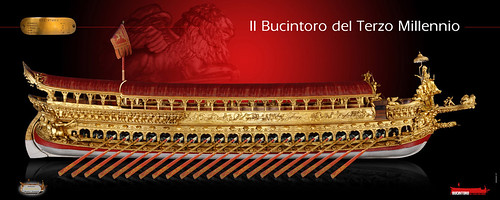
Bucintoro
2008 February « Venice from beyond the bridge

The Bucintoro was the Doge's big parade boat. It was used the Ascension day, when a gold ring where dropped in to the sea as sign of the Republic power over the sea (Sposalizio del mare).
The fist Bucintoro was build by the Republic in 1311, since then it was rebuilt 3 times. It was 35 meters long, 7 meters large and 9 meters high, with 42 oars and 168 oarsmen. The last one was destroyed by the French in 1789.
Now there is a foundation that is trying to rebuilt it, they are looking sponsors for 15.000.000,00 euro.

Friday, March 13, 2009
Hipótese
A vida das gentes neste mundo, Senhor Sabugo, é isso. Um rosário de piscados. Cada pisco é um dia.
 Pisca e mama;
pisca e brinca;
pisca e estuda;
pisca e ama;
pisca e cria filhos;
pisca e geme os reumatismos;
por fim pisca pela última vez e morre.
- E depois que morre? - perguntou o Visconde.
 Pisca e mama;
 pisca e brinca;
pisca e estuda;
pisca e ama;
pisca e cria filhos;
pisca e geme os reumatismos;
por fim pisca pela última vez e morre.
- E depois que morre? - perguntou o Visconde.
- Depois que morre, vira hipótese. É ou não é?
(Exerto de "A chave do tamanho", Monteiro Lobato)
Monday, March 2, 2009
Wednesday, February 18, 2009
Citi Bang!
Citibank, a company that’s taken billions of dollars in bailout money apparently plans to spend $400 million to stick its logo on a stadium. This giant branding exercise isn’t going to help Citibank sell its products, and it certainly isn’t going to help relieve the credit crisis. But that’s the kind of horse puckey that happens when marketeers convince top management that “branding” is vitally important.
Serão descendentes de portuguêses??
Primeiro eu esbarrei no seguinte link patrocinado que, convenhamos, soa muuuuito estranho:
Fui verificar e era o site de um prestador de serviço de risk management de saúde. Alguém teve a brilhante idéia de chamar dar o atraente nome de "disease management" a "risk management de saúde".
No site dos gajos há várias seções interessantes. Uma delas (está no menu assim) é:
Acho que é mesmo para ser piada. Acho.
Numa outra seção, eles "premiam" empresas que fazem muitos erros em seus programas de risk... digo, disease management. O nome do prêmio? Intelligent Design!
Bom, aí eu acho que eles REALMENTE estão de sacanagem com os fundamentalistas cristãos (which is fine). A questão é: isso é bom marketing??
Continuando na tradição de um eestilo de redação bizarro, a descrição do Intelligent Design Award é:
Now, is this convoluted or what?
Como será o pensamento desses caras? Seguirá uma lógica própria, diferente da humana? Serão descendentes de portugueses?
Disease Mgmt Consulting
DM Consulting/Procurement Expertise for insurors, employers, PPOs, TPAs
www.dismgmt.com
www.dismgmt.com
Fui verificar e era o site de um prestador de serviço de risk management de saúde. Alguém teve a brilhante idéia de chamar dar o atraente nome de "disease management" a "risk management de saúde".
No site dos gajos há várias seções interessantes. Uma delas (está no menu assim) é:
Free Materials
(Worth Every Penny)
(Worth Every Penny)
Acho que é mesmo para ser piada. Acho.
Numa outra seção, eles "premiam" empresas que fazem muitos erros em seus programas de risk... digo, disease management. O nome do prêmio? Intelligent Design!
Bom, aí eu acho que eles REALMENTE estão de sacanagem com os fundamentalistas cristãos (which is fine). A questão é: isso é bom marketing??
Continuando na tradição de um eestilo de redação bizarro, a descrição do Intelligent Design Award é:
Intelligent Design Awards recognize those contributions which most set back evolution of the disease management and wellness fields.
Now, is this convoluted or what?
Como será o pensamento desses caras? Seguirá uma lógica própria, diferente da humana? Serão descendentes de portugueses?
Thursday, December 25, 2008
To sell or not to sell
Dear Wikipedia friends,
I'm answering to Jimmy Wales appeal and and making a donnation to Wikipedia.
But I really can not understand what is the big deal with having some Google links in a quiet sidebar and have them pay for your explendid work and for the service it renders to all of us (I was going to write "mankind", thought it too grandiouse, but I do think you guys are doing something remarkable for all mankind).
I certainly would hate having pop-ups, banners, stupid-things-flying-over-the-page, and the likes at Wikipedia, but I honestly can see no harm in a few, discrete, well-behaved, sometimes thought-provoking, Google (or any other's) links on the sidebar. All major free content providers -- PBS, BBC etc. -- have some sort of funding from advertising. It is just common sense.
Additionally, I think you guys are not giving the necessary thought to finding a second alternative to donnation, other than advertising (though I appreciate and constantly buy at the memorabilia online store). For instance: what if you had other sites, where it would be all too natural to insert advertising or to charge for content? Something with quizzes, tests, homework/research support or a number of other type of content that do not occur to me right now.
Though I'm making my donation, I sort of feel I'm placating the thirst of the drunkard.
All the best,
I'm answering to Jimmy Wales appeal and and making a donnation to Wikipedia.
But I really can not understand what is the big deal with having some Google links in a quiet sidebar and have them pay for your explendid work and for the service it renders to all of us (I was going to write "mankind", thought it too grandiouse, but I do think you guys are doing something remarkable for all mankind).
I certainly would hate having pop-ups, banners, stupid-things-flying-over-the-
Additionally, I think you guys are not giving the necessary thought to finding a second alternative to donnation, other than advertising (though I appreciate and constantly buy at the memorabilia online store). For instance: what if you had other sites, where it would be all too natural to insert advertising or to charge for content? Something with quizzes, tests, homework/research support or a number of other type of content that do not occur to me right now.
Though I'm making my donation, I sort of feel I'm placating the thirst of the drunkard.
All the best,
Tuesday, December 9, 2008
Christus Agna Gaelica

Photographer: Unknown, 1966.
Learn about Raquel here: en.wikipedia.org/wiki/Raquel_Welch
Publicity shot for the film, One Million Years BC en.wikipedia.org/wiki/One_Million_Years_B.C.
It really looks like one million years since we last could see an ad picture like this
Learn about Raquel here: en.wikipedia.org/wiki/Raquel_Welch
Publicity shot for the film, One Million Years BC en.wikipedia.org/wiki/One_Million_Years_B.C.
It really looks like one million years since we last could see an ad picture like this
Saturday, November 29, 2008
Swatch's great ideas factory

Swatch has launched a "007 Villain Collection", with 22 watches, referencing the villains of 22 007 flicks.
The large watch at the left is featured in the opening titles of the 1965 "Thunderball" movie (a bad one, incidentally). Jonathan Pryce was the villain Emilio Largo. The silver watch, on the right is Swatch's creation. Try finding out the similarities and references.
All the 22 watches have interesting references to the corresponding movie. Some quite subtle. Jaw's teeth, for instance, are referenced in its watch strap.
One watch is dedicated to the anonymous, infamous, evil-looking white Blofeld's cat. It resembles a pet collar. Smart guys...
By the way: have you noticed the reference to Emilio Largo's eye patch, on the swatch dial?

Thursday, November 27, 2008
Howard Schultz's now classic Valentine's Day memo in 2007
As you prepare for the FY 08 strategic planning process, I want to share some of my thoughts with you.
Over the past ten years, in order to achieve the growth, development, and scale necessary to go from less than 1,000 stores to 13,000 stores and beyond, we have had to make a series of decisions that, in retrospect, have lead to the watering down of the Starbucks experience, and, what some might call the commoditization of our brand.
Many of these decisions were probably right at the time, and on their own merit would not have created the dilution of the experience; but in this case, the sum is much greater and, unfortunately, much more damaging than the individual pieces.
For example
When we went to automatic espresso machines, we solved a major problem in terms of speed of service and efficiency. At the same time, we overlooked the fact that we would remove much of the romance and theatre that was in play with the use of the La Marzocca machines. This specific decision became even more damaging when the height of the machines, which are now in thousands of stores, blocked the visual sight line the customer previously had to watch the drink being made, and for the intimate experience with the barista.
This, coupled with the need for fresh roasted coffee in every North America city and every international market, moved us toward the decision and the need for flavor locked packaging. Again, the right decision at the right time, and once again I believe we overlooked the cause and the affect of flavor lock in our stores. We achieved fresh roasted bagged coffee, but at what cost? The loss of aroma -- perhaps the most powerful non-verbal signal we had in our stores; the loss of our people scooping fresh coffee from the bins and grinding it fresh in front of the customer, and once again stripping the store of tradition and our heritage?
Then we moved to store design
Clearly we have had to streamline store design to gain efficiencies of scale and to make sure we had the ROI on sales to investment ratios that would satisfy the financial side of our business. However, one of the results has been stores that no longer have the soul of the past and reflect a chain of stores vs. the warm feeling of a neighborhood store. Some people even call our stores sterile, cookie cutter, no longer reflecting the passion our partners feel about our coffee.
In fact, I am not sure people today even know we are roasting coffee. You certainly can't get the message from being in our stores. The merchandise, more art than science, is far removed from being the merchant that I believe we can be and certainly at a minimum should support the foundation of our coffee heritage. Some stores don't have coffee grinders, French presses from Bodum, or even coffee filters.
Now that I have provided you with a list of some of the underlying issues that I believe we need to solve, let me say at the outset that we have all been part of these decisions. I take full responsibility myself, but we desperately need to look into the mirror and realize it's time to get back to the core and make the changes necessary to evoke the heritage, the tradition, and the passion that we all have for the true Starbucks experience. While the current state of affairs for the most part is self induced, that has lead to competitors of all kinds, small and large coffee companies, fast food operators, and mom and pops, to position themselves in a way that creates awareness, trial and loyalty of people who previously have been Starbucks customers. This must be eradicated.
I have said for 20 years that our success is not an entitlement and now it's proving to be a reality. Let's be smarter about how we are spending our time, money and resources. Let's get back to the core. Push for innovation and do the things necessary to once again differentiate Starbucks from all others. We source and buy the highest quality coffee. We have built the most trusted brand in coffee in the world, and we have an enormous responsibility to both the people who have come before us and the 150,000 partners and their families who are relying on our stewardship.
Finally, I would like to acknowledge all that you do for Starbucks. Without your passion and commitment, we would not be where we are today.
Onward…
Wednesday, November 26, 2008
WPP’s Sorrell Given Right to Herd Sheep Over London Bridge
By Jim EdwardsAdvertising Industry Blog on BNET
WPP chief Martin Sorrell has been given the freedom of the City of London by the lord mayor and other bigwigs. The purely ceremonial honor comes with a number of bizarre privileges dating back to medieval times. Among them is the right to herd sheep over London Bridge. Other rights Sorrell now has include:
- To go about the City with a drawn sword.
- To be married in St. Paul’s Cathedral.
- To be buried in the City.
- If convicted of a capital offense, to be hanged with a silken rope.
- To avoid being press-ganged (i.e. forced to work on a ship).
- To be drunk and disorderly without fear of arrest.
Past “freemen” include The Queen, Florence Nightingale, Dwight Eisenhower and Theodore Roosevelt.
Monday, November 24, 2008

Wednesday, November 19, 2008

Darwin Monkey
Sonho de consumo:
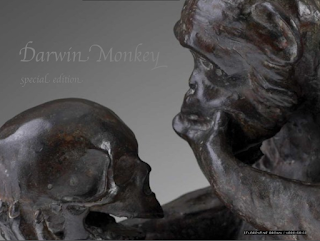
 This iconic bronze statue is available in its original form for the first time in almost a century.
Hugo Rheinhold's "Monkey with Skull" -- real, large, bronze statue in a deep and rich Florentine Brown patina. Marble plinth & 100% bronze.
Overall dimensions are (h) 34.5 cm x (w) 20.5 cm x (d) 23.0 cm.
The weight is 10 kg.
Made to order. Branding to your specification possible. All enquiries and requests are welcome. Orders can be made online or by phone. Any location. Delivered straight to your door.
US$ 940

 This iconic bronze statue is available in its original form for the first time in almost a century.
Hugo Rheinhold's "Monkey with Skull" -- real, large, bronze statue in a deep and rich Florentine Brown patina. Marble plinth & 100% bronze.
Overall dimensions are (h) 34.5 cm x (w) 20.5 cm x (d) 23.0 cm.
The weight is 10 kg.
Made to order. Branding to your specification possible. All enquiries and requests are welcome. Orders can be made online or by phone. Any location. Delivered straight to your door.
US$ 940
Tuesday, November 11, 2008
Media's Advertising Addiction Leaves Billions on the Table
The equity value and potential revenues being left on the table by media companies is in the billions. It is long overdue for these companies to focus on how they can wean themselves off their addiction to advertising revenues and begin capturing the other 70% to 75% of corporate marketing budgets they rarely touch. Media companies need to convince investors they have the management team in place that can develop and implement a coherent and intelligent vision for the future – a future in which they will be forced to be less dependent on advertising revenues. Just as America must wean itself off foreign oil by developing new energy sources, media companies must develop and implement a new vision if they are to survive. It's clear, based on their continuing emphasis on traditional business models… their reaction to the softening economy… and the unyielding downward pressure on media company stocks… that the current management teams at all but a few companies are failing to make the transformation to the new economy.
In just the past few weeks, the media industry has gone from a wake-up call to a migraine headache. Across all media companies and agencies staffs are being cut in anticipation of an accelerating economic downturn precipitated by expected reductions in corporate ad spending.
While there are tidbits of good news here and there, overall it's impossible to view the short-term industry future with anything but nervous caution, at best. A depressed holiday shopping season will exacerbate an already negative industry mood. Unfortunately, many media companies are cutting in all the wrong places, trimming where there is no fat, and eliminating overhead without any cohesive strategic vision for how to rebuild and reconstruct the businesses they are now deconstructing.
For years, the signs have been on the wall. Traditional media companies have had plenty of opportunities to invest in business models that would have prepared them for these tough times. I'm not referring to digital investments, which of course are an important part of future growth opportunities. Ambitious digital plans have been rolled out, but traditional ad-dependent business models have been anchor-bolted onto them. The focus should have been and could have been on identifying core assets that have viable brand extension and growth potential and on shedding those assets that remain dependent on commoditized supply and demand market fluctuations.
Every network television series should have been reviewed for its long term brand vitality – not based on ratings but based on non-traditional revenue potential. Every section of every newspaper… every personality on every radio station and every format within a radio company… every editorial category within a magazine and every publication within a magazine company… all need to be analyzed as independent brands. Just as Procter & Gamble assessed the brand vitality of each product and category the company marketed, and shed several while investing heavily in others, so should media companies have viewed their businesses as collections of independent brands. Each media brand needs to be assessed for its potential to generate revenues from events, sales promotion, database marketing, cause related initiatives, long-tail sales, and other below-the-line marketing communications budgets.
Some companies have flailed at efforts to conduct strategic business reviews. A few, like Meredith, Disney, Google and IDG, have succeeded to varying degrees. Brand reviews need to be conducted by non-traditional experts who are knowledgeable of a company's assets but unaffiliated with the core editorial and business traditions of the company. Anna Wintour at Vogue has no true perception of the value of her brand as a long-tail marketing enterprise any more than David E. Kelley understands the event, database marketing and digital marketing opportunities represented by Boston Legal.
And the traditional consulting companies like Booz, McKinsey and Bain & Company are mostly locked into outdated Harvard Business School case studies and antiquated perceptions of media industry realities. They are incapable of bringing forward thinking non-traditional vision to the companies they advise.
There is less time than they realize for major media companies to reinvent their business models. The writing was on the wall in 1993 when I wrote in my first book Adbashing,
"Media have traditionally not been viewed as marketing partners by advertisers or their agencies. Rather, they have been perceived as commodities designed to deliver a message as inexpensively as possible to a particular audience. Media sales representatives are not typically challenged to develop new and creative means of addressing a client's specific marketing needs."
If media companies want to survive for the next 15 years they must act quickly to alter this paradigm and present a coherent future-looking vision that will appeal to both marketers and investors. They must cure themselves of their advertising addiction.
Subscribe to:
Posts (Atom)